By submitting, you agree to our Privacy Policy.
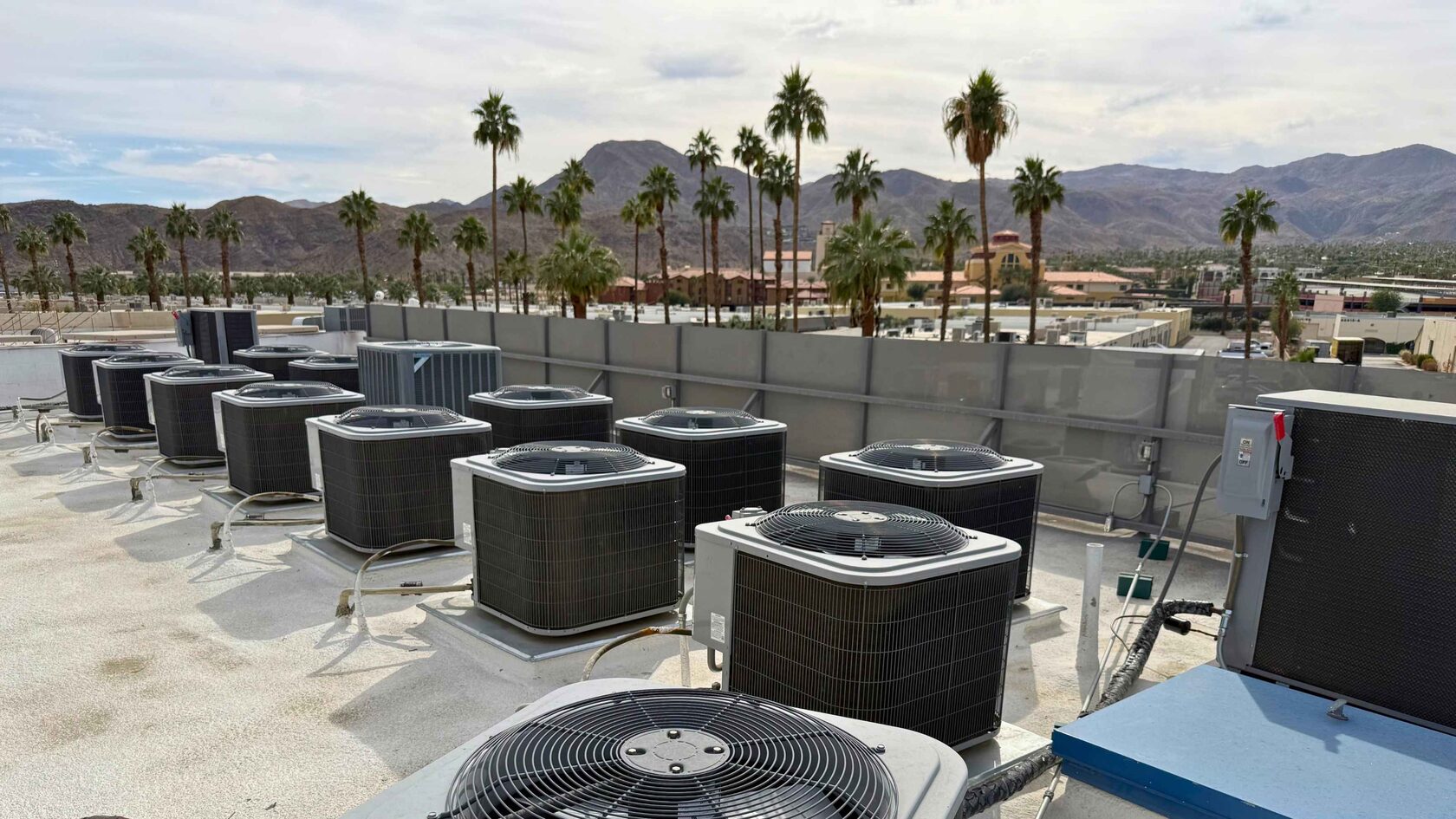
Humidity control, dehumidification, reheat verification, and condensation prevention delivered with an uptime-first maintenance mindset.
Service-first. Documentation-driven. Built for controlled environments.
15–30 min on-site assessment. Written findings. Priority action plan.
Why facilities call AERIA
Built for environmental stability, documentation, and uptime
Licensed and insured commercial HVAC
Coachella Valley coverage
Controlled environment focus
Documentation after every visit
Uptime-first maintenance
Cultivation facilities don’t need “AC repair.” They need HVACD discipline.
In controlled environments, temperature is only one part of stability. Dew point, latent load, reheat behavior, airflow distribution, and sensor truth determine whether the facility stays stable or starts chasing swings.
AERIA approaches HVACD as a production-critical system. We stabilize first, document what changed, and build prevention through maintenance standards, control logic, and field documentation.
This is why “cold air” is not the same as environmental control.
Failure patterns we see in controlled environments
Most instability problems in cultivation facilities do not begin with a single broken part. They begin with recurring operating patterns that quietly weaken moisture control, airflow truth, and environmental consistency.
Mode transitions happen fast. If dew point cannot hold through lights-off, the facility is operating in risk.
Equipment starts and stops, but never runs long enough to remove moisture consistently across the room.
Dew point meets cold surfaces, often amplified by insulation gaps, airflow pockets, and unstable control logic.
Comfort-cooling logic can shorten runtime and weaken real moisture removal in high-latent environments.
If sensors do not reflect representative room air, controls start chasing the wrong target and stability breaks down.
Hot and humid zones form where returns do not capture representative air and mixing is incomplete.
Our method: stabilize first, then engineer prevention
We map rooms, airflow paths, equipment behavior, control responses, drains, insulation risk points, and sensor placement across the facility.
You receive a concise summary of observed symptoms, likely root causes, environmental risk level, and prioritized corrective actions.
The fastest path to stable dew point, balanced airflow, and reduced condensation risk — aligned with your operating schedule.
Preventive maintenance cadence matched to latent-load reality, with service standards, response protocols, and documentation.
Before/after photos, readings logs, and clear next actions your facility team can rely on between service visits.
When facilities call us
Most walkthroughs begin after recurring environmental patterns start disrupting stable cultivation conditions.
Moisture loads rise quickly when lights shut down and airflow patterns shift.
Dew point meets cold surfaces, often revealing airflow imbalance or insulation gaps.
Similar grow rooms show different humidity and temperature behavior due to airflow distribution or control logic.
Equipment gets repaired, but the underlying environmental instability remains.
What a cultivation HVACD PM program actually includes
Preventive maintenance in controlled environments is not only filter changes and coil cleaning. It focuses on maintaining stable moisture control and reliable environmental behavior.
Confirming that dehumidification capacity and runtime maintain stable dew point across operating cycles.
Ensuring supply and return paths capture representative room air and avoid hidden humidity pockets.
Inspecting drain systems and surfaces where condensation risk may develop.
Confirming sensors reflect representative room air to prevent control drift.
Observing compressor and dehumidification cycles for short-cycling or unstable operation.
Logging readings, observations, and trends for future diagnostics and operational stability.
Preventive maintenance built for uptime, not paperwork
Most PM checklists were designed for comfort systems. Controlled environments need a different standard: drains, coils, reheat behavior, sensors, airflow discipline, and documentation that helps teams manage forward.
Our PM programs focus on keeping dehumidification capacity real, preventing condensation risk points, stabilizing controls, and reducing unplanned downtime.
Tell us your facility basics. We’ll propose a PM structure matched to uptime risk.
Documentation-driven service. No product sales.
Emergency response for humidity spikes
When humidity spikes, minutes matter. Stabilization comes first, root cause diagnosis second, prevention changes third.
If you need urgent response, call and label the request “Humidity Spike.”
Documentation standards and proof assets
AERIA documents what was observed, what changed, and what the facility team should watch next. Our proof assets are built around field notes, readings context, visit summaries, and prioritized actions.
De-identified example of field photos, readings snapshot, visit summary, and prioritized next actions.
Work performed, operating risk notes, parts used, and follow-up actions documented for facility teams.
Facility teams do not need vague “service completed” notes. They need clear records of what was observed, what was done, what still carries risk, and what should be checked next.
Get the HVACD PM Checklist
One-page checklist to reduce humidity swings, condensation risk, and silent capacity loss in cultivation facilities.
FAQ
Practical answers about walkthroughs, humidity-control logic, documentation, response priority, and PM structure for cultivation facilities.
What does a facility walkthrough include?
A focused on-site assessment of rooms, airflow paths, equipment behavior, drains, insulation risk points, and sensor placement, followed by written findings and a priority action plan.
Do you work with cannabis facilities?
We service cultivation facilities and controlled environment operations as HVACD contractors. We do not sell products.
Why does oversizing cooling make humidity harder to control?
In many high-latent environments, short runtime reduces consistent moisture removal. The fix is rarely more cooling and more often correct dehumidification behavior, controls, and airflow discipline.
What documentation do you provide after service?
Visit summary, photos where relevant, readings notes, work performed log, and a prioritized next-actions list.
How fast can you respond?
Response depends on active workload and severity. Humidity spike and downtime risks are prioritized.
What does “humidity control” mean in your approach?
Stability across operating modes. If dew point cannot hold through transitions, the facility is operating in risk.
Can you help with sensors and alarms?
Yes. We can assess placement, drift risk, calibration cadence, and recommend thresholds aligned to stability goals.
Do you offer PM programs?
Yes. PM is structured around uptime and latent-load reality, not generic comfort-cooling checklists.
Why many HVAC contractors struggle with cultivation facilities
Cultivation environments behave differently from comfort cooling systems. Traditional HVAC service models are often designed around temperature control, not moisture stability.
Many service approaches prioritize temperature while latent load and dew point behavior remain unchecked.
Environmental patterns often appear over hours or operating cycles, not during a quick repair visit.
Airflow distribution and return placement strongly influence humidity stability.
Without historical readings and service records, patterns repeat and root causes remain hidden.
Ready to stabilize your facility environment?
Book a walkthrough for documented findings and prioritized actions, or request an uptime-first PM proposal.
By submitting, you agree to our Privacy Policy.
By submitting, you agree to our Privacy Policy.
